
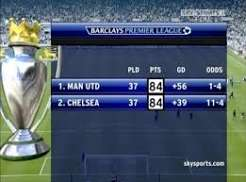

The 2008-2009 Premier League campaign unfolded against a backdrop of intense competition at the top of the table, featuring Manchester United’s relentless title defense, Liverpool’s surging challenge, and Chelsea’s tactical evolution. Beneath the surface of tactical battles and transfer market maneuvers lay a powerful psychological undercurrent driven by millions of passionate supporters worldwide. Fan sentiment inherently shapes the financial ecosystem of football wagering, creating pricing anomalies driven by emotional investment rather than cold statistical probability. When mass sentiment aligns with historical club prestige, bookmakers adjust their betting lines to accommodate public money, exposing a fascinating interplay between human bias and market efficiency.
How Tribal Loyalty Distorts Market Expectations
Supporters consistently overestimate their club’s probability of victory due to deeply ingrained tribal identity and cognitive biases. In the 2008-2009 season, clubs with massive global fanbases like Manchester United and Arsenal regularly commanded shorter odds than their underlying metrics strictly justified, simply because supporters flooded the market with backing for their preferred teams. This phenomenon, known in behavioral economics as the favorite-longshot bias amplified by loyalty, forces sportsbooks to shade prices. Bookmakers recognize that emotional capital dictates spending behavior among casual fans, allowing sophisticated operators to capitalize on inflated prices for underdogs facing prestigious opponents.
Market adjustments occur incrementally as matchdays approach, reflecting the shifting balance between sentimental public wagers and sharp professional money. Understanding this friction requires examining the distinct behavioral patterns that separate casual supporters from objective market participants during high-stakes fixtures.
- Confirmation bias leads supporters to dwell exclusively on past triumphs while dismissing current tactical vulnerabilities.
- Availability heuristic causes fans to overvalue a team’s most recent blowout victory when evaluating upcoming away fixtures.
- Loss aversion drives emotional bettors to double down on failing wagers to recover psychological equilibrium rather than accepting a rational exit.
- Social proof amplifies public consensus within fan communities, creating artificial momentum behind specific match outcomes.
The psychological weight of these cognitive patterns transforms ordinary fixture lists into complex behavioral testing grounds. When millions of individuals act simultaneously under the influence of shared enthusiasm, the resulting odds no longer reflect raw probability alone. Instead, they become a quantifiable index of collective wishful thinking, forcing disciplined analysts to look past the marquee names and evaluate the physical realities on the pitch. Recognizing these distortions creates an analytical advantage for anyone willing to treat football fandom as a variable rather than a baseline truth.
The Financial Impact of the Big Four Dominance
The structural hierarchy of the Premier League during the late 2000s established a distinct economic reality often referred to as the Big Four era. Manchester United, Chelsea, Liverpool, and Arsenal held a near-monopoly on Champions League qualification, creating massive disparities in squad depth and financial stability compared to mid-table contenders. Bookmakers constructed their opening odds around this entrenched dominance, baking historical superiority directly into weekly pricing models. Fans grew accustomed to treating matches involving these elite sides as foregone conclusions, which heavily influenced accumulator betting patterns across the board.
Supporters of smaller clubs faced perpetually undervalued prices when their teams played away at Emirates Stadium or Anfield, regardless of recent form or injury crises. Conversely, backing a giant to win by multiple goals frequently offered poor value because public demand drove down the potential payout. This structural imbalance forced analytical bettors to look closely at congested fixture schedules around European nights to find moments where elite squads were vulnerable to fatigue. The psychological fatigue of managing dual domestic and continental campaigns often caught up with squads by the spring months of 2009, creating unexpected upsets that left casual supporters reeling.
Behavioral Shifts During Title Races and Relegation Battles
As the 2008-2009 season reached its dramatic climax in May, fan psychology underwent a radical shift driven by the urgency of impending consequences. Title contenders experienced heightened scrutiny where every dropped point felt catastrophic to their supporters, inflating the psychological pressure transmitted to the players on the pitch. Bookmakers responded to this heightened emotional climate by tightening spreads on matches involving Manchester United and Liverpool, knowing that public volume would remain exceptionally high regardless of fractional price movements.
At the other end of the table, relegation battles involving clubs like Newcastle United, West Bromwich Albion, and Sunderland generated erratic betting patterns. Desperate supporters engaged in wishful thinking, backing their struggling sides against relegation rivals based purely on emotional necessity rather than defensive statistics or away form. This wave of sentimental money frequently created severe mispricing in the market, as bookmakers accommodated the influx of panic-driven wagers from local fanbases desperate for survival.
The Role of Media Narratives in Shaping Public Perception
Sports journalism and punditry played a massive role in shaping public sentiment throughout the 2008-2009 campaign, directly impacting how betting markets reacted to weekly developments. Media outlets often amplified dramatic storylines, such as Cristiano Ronaldo’s quest for individual accolades or Rafael Benitez’s tactical friction with opposing managers, creating powerful narratives that overshadowed objective statistical analysis. Fans consumed these narratives daily, internalizing the media’s framing and translating those opinions directly into their betting slips.
Bookmakers closely monitored media cycles, knowing that a headline-grabbing injury or a controversial refereeing decision would trigger an immediate wave of reactionary money from the general public. When a prominent manager faced dismissal rumors, public sympathy or panic often skewed the odds on their next fixture beyond reasonable boundaries. Navigating this environment required separating genuine tactical shifts from media-driven hysteria, a challenge that separated casual observers from disciplined market analysts.
Technological Evolution in Matchday Wagering Platforms
The landscape of football wagering underwent significant modernization during this era, transitioning from traditional high-street betting shops and telephone lines toward digital infrastructure. This technological shift allowed fans to place wagers instantly from home, fundamentally altering how emotional impulses translated into financial decisions. The emergence of early digital betting destinations provided supporters with unprecedented access to live markets, increasing the speed at which public sentiment could distort prices right up until kickoff.
Comparative Evolution of Betting Access
| Era Feature | Traditional Betting Shops (Pre-2000s) | Digital Platforms (2008-2009 Era) |
| Transaction Speed | Slow, physical presence required | Instantaneous via internet browsers |
| Market Variety | Limited to basic match outcomes and scores | Expanded live and prop markets |
| Emotional Friction | High physical barrier cooled impulsive bets | Low friction encouraged immediate reactive wagers |
| Information Access | Delayed print newspapers and teletext | Real-time forums and early stats portals |
The transition toward web-based infrastructure permanently changed how supporters interacted with financial risk during matchdays. While traditional shops forced a cooling-off period due to travel requirements, digital environments allowed fans to react instantly to a controversial goal or a missed penalty in real time. This immediate accessibility heightened the role of emotional impulsivity, as supporters could chase losses or back their teams on a whim without pausing to evaluate underlying probabilities.
Evaluating Value Amidst Emotional Noise
Finding genuine value in a market heavily influenced by millions of passionate supporters requires a methodical ufabet that deliberately strips away club loyalty and popular narratives. During the 2008-2009 season, matches featuring regional derbies or historic rivalries were particularly prone to emotional mispricing, as fans allowed historical animosity to dictate their financial decisions. Analytical bettors learned to fade the public consensus during these high-emotion fixtures, capitalizing on artificially inflated prices for disciplined defensive teams that could frustrate emotional attacks.
The mechanics of identifying mispriced odds often involved tracking market movement from opening lines to kickoff, observing where heavy public money forced bookmakers to adjust their liability. When an elite club received disproportionate backing due to sheer brand recognition rather than current form, the opposing side presented a mathematically sound opportunity for observant participants. Mastering this discipline required treating football matches purely as collections of statistical data points while completely ignoring the sentimental weight attached to club crests and historic rivalries.
Strategic Allocation Within Modern Betting Interfaces
Modern digital tools transformed how enthusiasts approached sports forecasting during the late 2000s, introducing new methods for managing risk across complex fixture lists. As online platforms matured, participants gained access to granular statistical breakdowns that previously required proprietary institutional resources to compile. A robust betting interface on a sports betting service allowed users to compare multi-variable propositions instantly, shifting the focus from simple match outcomes to specialized markets like disciplinary records and corner counts.
Beyond basic match outcomes, online platforms enabled participants to explore diverse strategic avenues, including live in-play wagering and accumulator structures that required careful bankroll distribution. Evaluating these complex offerings demanded a structured approach to risk, ensuring that short-term emotional reactions did not derail long-term financial discipline. By utilizing advanced digital tools, analytical minds could systematically isolate value and navigate the emotional noise generated by millions of passionate supporters worldwide.
Summary
Football fan psychology remains one of the most powerful forces shaping betting markets during high-profile seasons like the 2008-2009 Premier League campaign. Tribal loyalty, cognitive biases, and media-driven narratives consistently pull odds away from true statistical probabilities, creating actionable opportunities for disciplined observers. Recognizing how emotional capital influences public wagering allows analytical participants to exploit mispriced lines and navigate the complexities of football fandom with clarity.