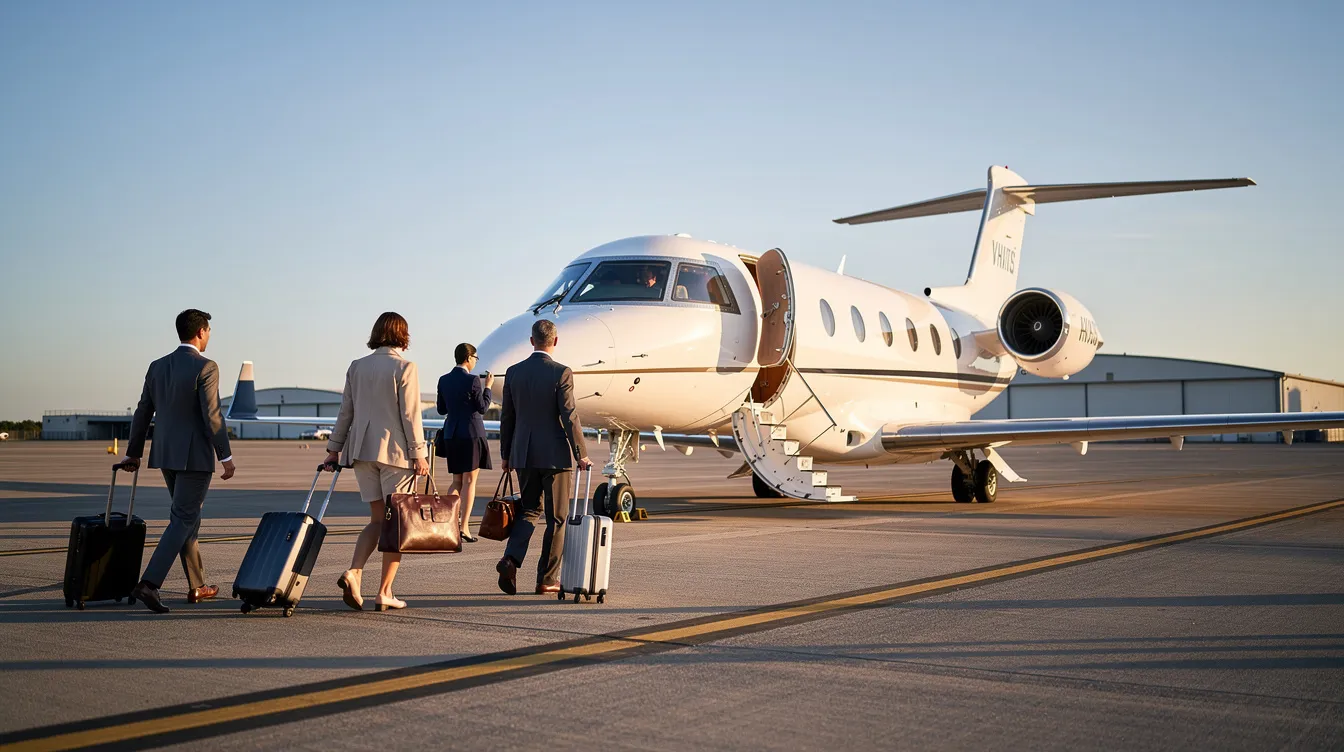
Premium air travel is not always about champagne, glossy lounges, and soft leather seats. Frankly, sometimes, it is about time not falling apart.
For instance, there might be a board meeting at 9 a.m. Also, it might be a family emergency or a cross-border legal signing. Moreover, it might even be a narrow event window that does not care about airline delays.
In those moments, premium travel becomes less of a luxury and more of a practical operating decision.
Why Time-Sensitive Travel Needs a Different Lens
For ordinary holidays, a two-hour delay feels irritating. Meanwhile, for high-stakes journeys, the same delay can become expensive and awkward. Also, it might even be impossible to recover from.
Therefore, the right question is not “Which option feels premium?” but “Which option protects the schedule best?”
That changes the whole calculation. Suddenly, the following factors start to matter more than the seat:
- Airport access
- Aircraft availability
- Baggage handling
- Immigration flow
- Contingency planning.
Choosing Between First Class, Business Class, and Private Aviation
Commercial premium cabins still work well when the following factors work well:
- The route is frequent
- Airline facilities are reliable
- The destination has strong airport connectivity.
However, as timing gets tighter, private aviation starts to make more sense. For instance, a private jet to Dubai might be a smart and positive choice for executives, families, and event travelers.
In general, it is better for people who need –
- Direct routing
- Flexible departure timing
- Fewer moving parts before arrival.
Basically, it is about removing the weak links rather than showing off.
Premium Air Travel Comparison
| Travel Option | Best For | Main Strength | Watch-Out Factor |
| Business Class | Long-haul work trips with stable schedules | Comfort, lie-flat rest, lounge access | Still tied to airline delays and fixed departure times |
| First Class | High-comfort international journeys | Privacy, service depth, better rest | Limited availability and high fares on fewer routes |
| Private Jet Charter | Urgent, flexible, or multi-city travel | Schedule control and direct access | Higher cost and careful operator selection are needed |
| Premium Airport Services | Tight airport transfers or VIP arrivals | Faster movement through airport processes | Service quality varies by airport and provider |
The Real Value Is Control, Not Just Comfort
Premium travel gets misunderstood because people focus too much on the visible aspects. In general, these include meals, cabin, chair positions, etc.
Yet, for time-sensitive travel, the real value lies in control. More precisely, it is about control over the following factors:
- Departure time
- Route selection
- Airport choice
- Check-in pressure
- Recovery options when something goes wrong.
Plan the Journey Backward
Primarily, a practical premium travel plan should begin with a fixed commitment rather than a flight search. For instance, if the event starts at noon, arrival at 11 a.m. is not planned. That is gambling in expensive shoes.
Instead, work backward from the commitment. Also, add buffers for –
- Traffic
- Immigration
- Weather
- Aircraft turnaround
- Sleep quality.
Also, consider the traveler’s condition on arrival.
What to Check Before Booking
Obviously, not every premium option earns the money it asks for. So, before booking, look past the polished descriptions. Also, check the actual operational details. Basically, the better choices make the journey quieter, cleaner, and less fragile.
- Confirm aircraft type, luggage capacity, and airport access. Moreover, check backup aircraft arrangements before any private charter booking.
- For commercial premium cabins, review historical timing on the route. Also, review connection windows, lounge access, and arrival-terminal efficiency.
- For urgent travel, avoid overly complicated routing. This is important even if it appears cheaper or slightly more comfortable on paper.
Route Strategy Matters a Lot
Essentially, a direct flight in business class may beat a more “luxurious” option with a risky connection. Similarly, a smaller airport closer to the final destination may save more real time than landing at a famous international hub.
Therefore, the route strategy deserves proper attention. In fact, the best premium itinerary mostly looks simple on paper. This is because it has fewer opportunities to break down.
Cost Should Be Judged Against Consequence
At the outset, premium air travel becomes easier to assess when the cost is compared with consequence. For instance, missing a wedding is personal, while missing a deal signing is financial. Meanwhile, the absence of medical treatment is serious in an entirely different way.
So, the fare or charter quote should not sit alone in the analysis. Instead, make sure to compare it against the following factors:
- Lost opportunity
- Fatigue
- Reputational damage
- The cost of emergency rebooking.
A Better Journey Is the One That Leaves Fewer Loose Ends
For time-sensitive journeys, premium air travel works best when it prioritizes the schedule over comfort. In fact, business class, first class, private aviation, and airport concierge services all have a place. However, none of them should be chosen for status alone.
So, choose the option that reduces uncertainty. Also, choose the route that holds up under pressure. Most importantly, build the trip so that arrival actually matters.
Leave a Reply